
A clear majority of respondents to our latest AI Pulse survey say Microsoft AI CEO Mustafa Suleyman's prediction that most white-collar tasks will be fully automated within 12-18 months is too aggressive.
But the pushback is on the timeline, not the direction. Only 6.2% of respondents called the prediction outright unrealistic. The vast majority believe meaningful automation is coming. They just disagree on how fast.
This week's survey drew 80 responses and also explored attitudes toward AI-generated video using real people's likenesses and whether organizations have started formal AI upskilling programs.
The Timeline Is Too Aggressive, Not the Vision
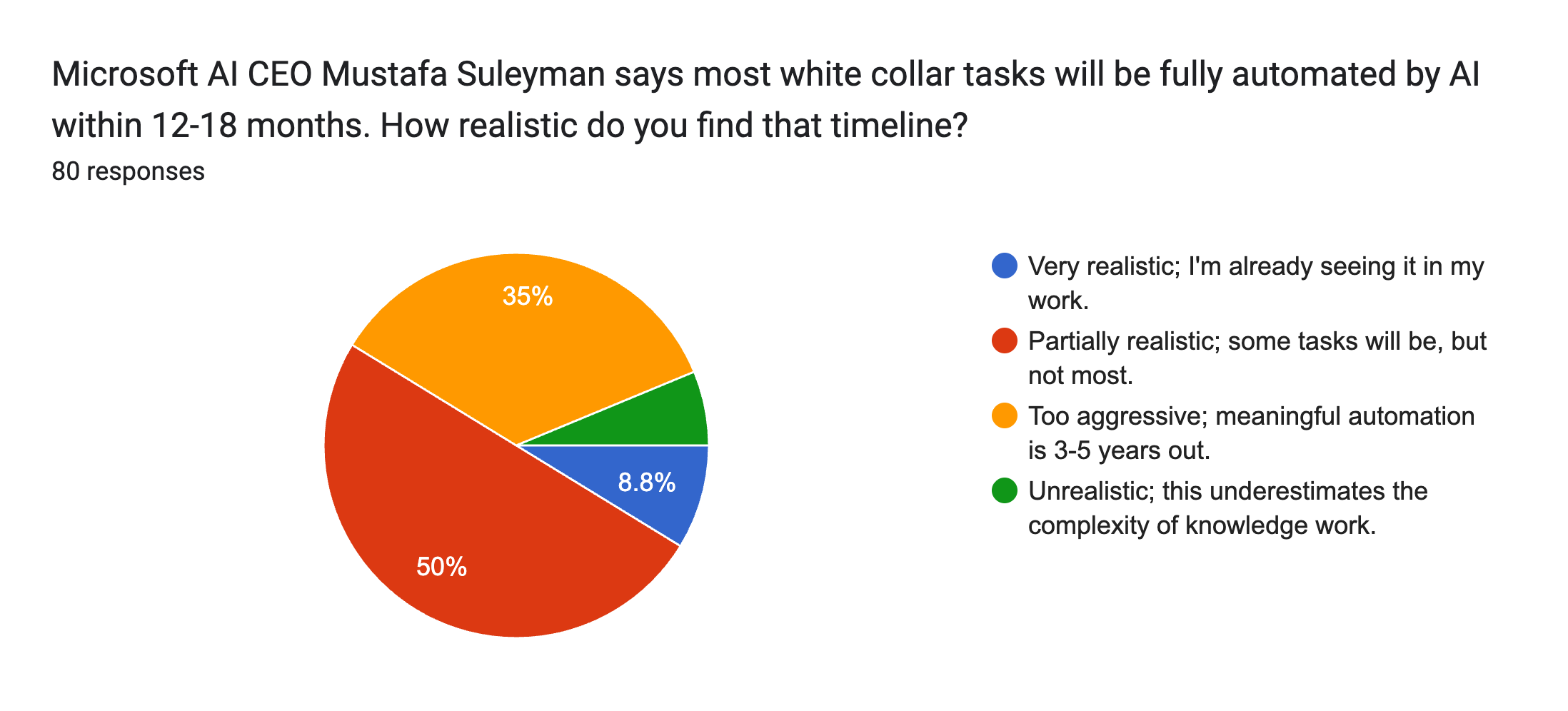
When asked how realistic they find Suleyman's 12-18 month timeline for full automation of most white-collar tasks:
-
50.0% said "partially realistic; some tasks will be, but not most.
-
35.0% said "too aggressive; meaningful automation is 3-5 years out.
-
8.8% said "very realistic; I'm already seeing it in my work.
-
6.2% said "unrealistic — this underestimates the complexity of knowledge work."
The split tells a consistent story. Half the audience sees partial automation arriving on that timeline. Another third sees it arriving, just further out. Fewer than 1 in 10 are experiencing it right now. But almost nobody is dismissing the premise entirely.
AI-Generated Video Using Real People Crosses a Line for Most
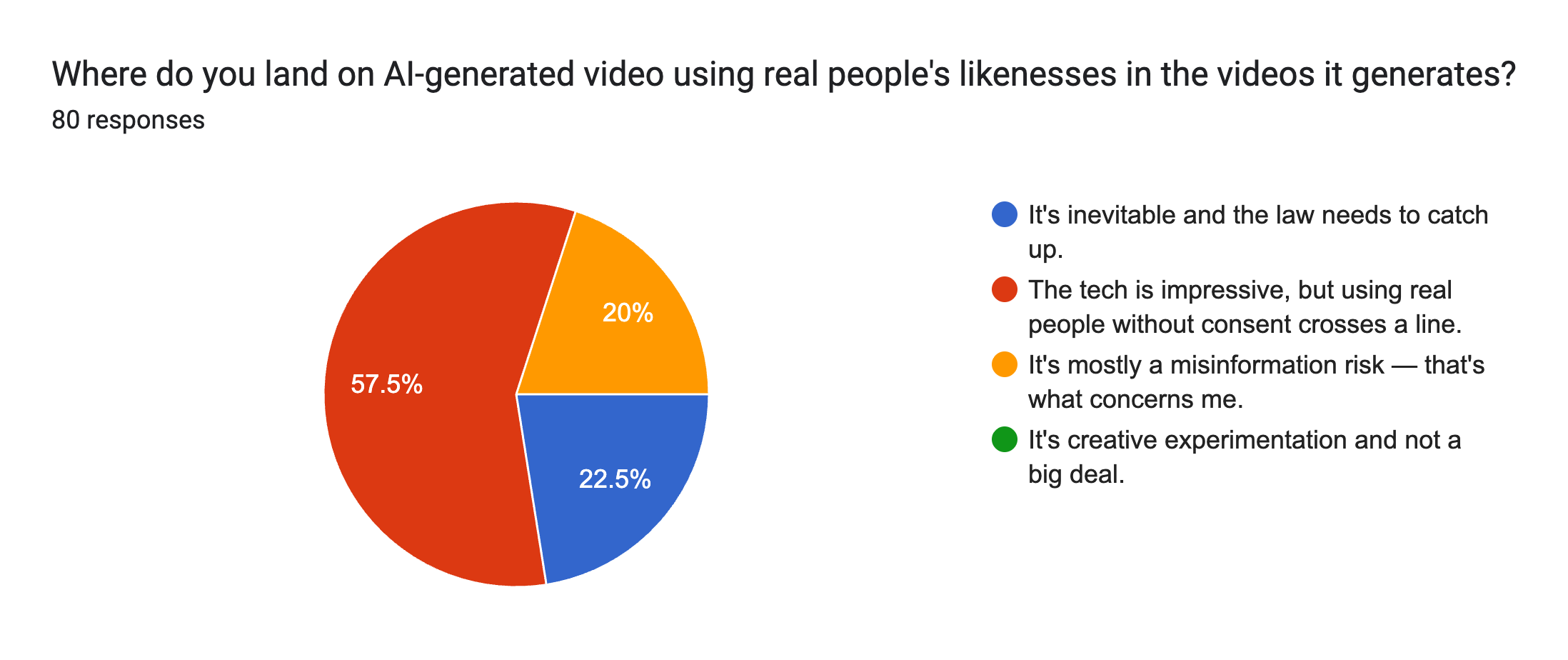
We also asked where respondents land on AI-generated video that uses real people's likenesses.
Not a single respondent dismissed the issue. The debate is only about which concern takes priority: consent, misinformation, or inevitability. The largest group draws the line at consent. But the 22.5% who call it inevitable suggest a meaningful portion of the audience has already moved past whether this should happen to how it will be governed.
Most Organizations Are Experimenting, Few Have Formal Programs
Finally, we asked whether organizations have started any formal AI upskilling or workforce planning in the past six months.
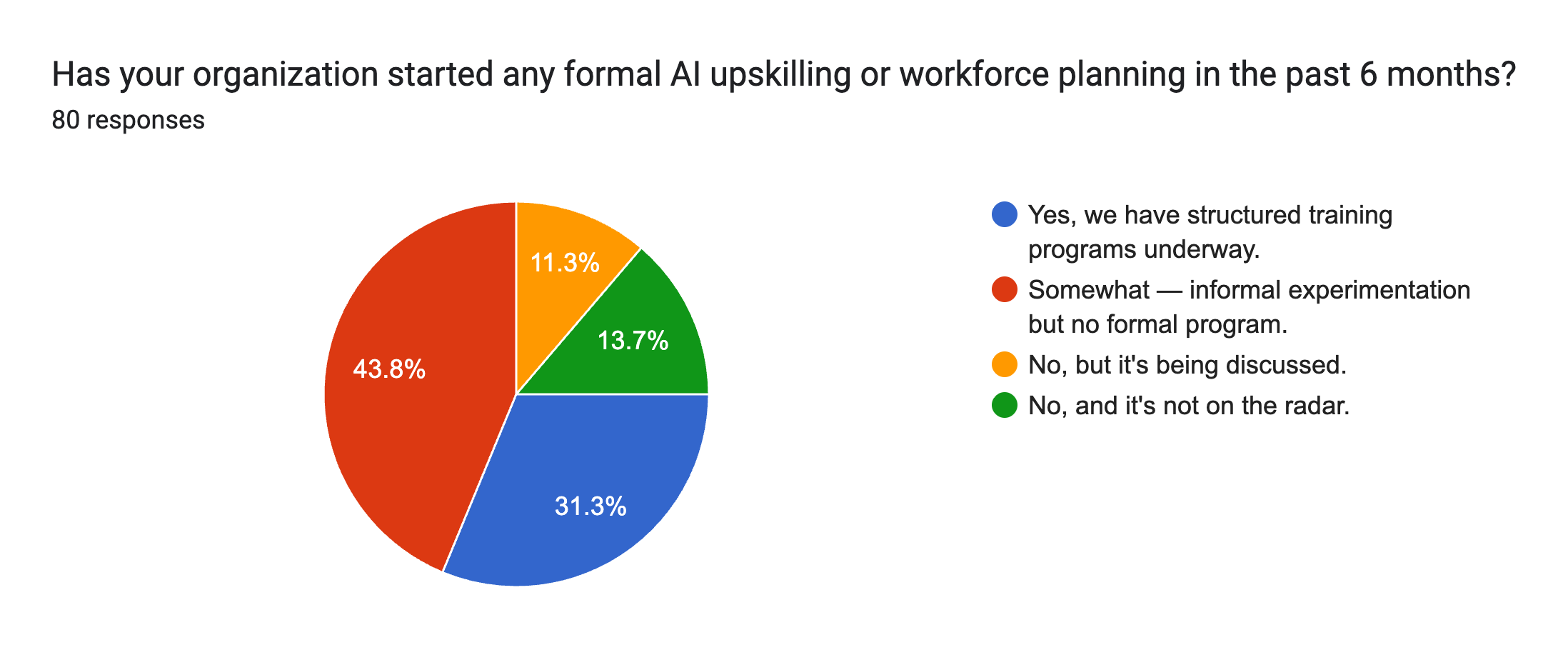
Three-quarters of respondents' organizations are doing something. But only 31.3% have anything structured in place. The largest group is still in informal experimentation mode. And 25% have either no plans or are only in discussion about their plans.
Methodology and Audience Description
In our ongoing AI Pulse surveys, we gather insights from listeners of our podcast to get a sense of how our audience feels about various topics in artificial intelligence. Each survey is conducted over a one-week period, coinciding with the first seven days after an episode is released. During that time, our episodes typically receive around 11,000 downloads.
Our survey results reflect a self-selected sample of listeners who choose to participate, and typically we receive a few hundred responses. While this is not a formal or randomized survey, it offers a meaningful snapshot of how our engaged audience perceives AI-related issues.
In summary, when you see percentages in our headlines, they represent the views of those listeners who chose to share their opinions with us. This approach helps us understand the pulse of our community, even if it doesn't represent a statistically randomized sample of the broader population.