
OpenAI faced backlash in past weeks for testing "app suggestions" in ChatGPT, a move many users interpreted as a shift toward advertising. Here's why that might not be such a good idea...
According to our latest AI Pulse survey, which polled 80 professionals, the vast majority of users are not willing to tolerate an ad-supported experience. In fact, 82.5% of respondents indicated they would rethink their use of the tool if ads or sponsored suggestions became a permanent fixture.
The Ad Tolerance Threshold
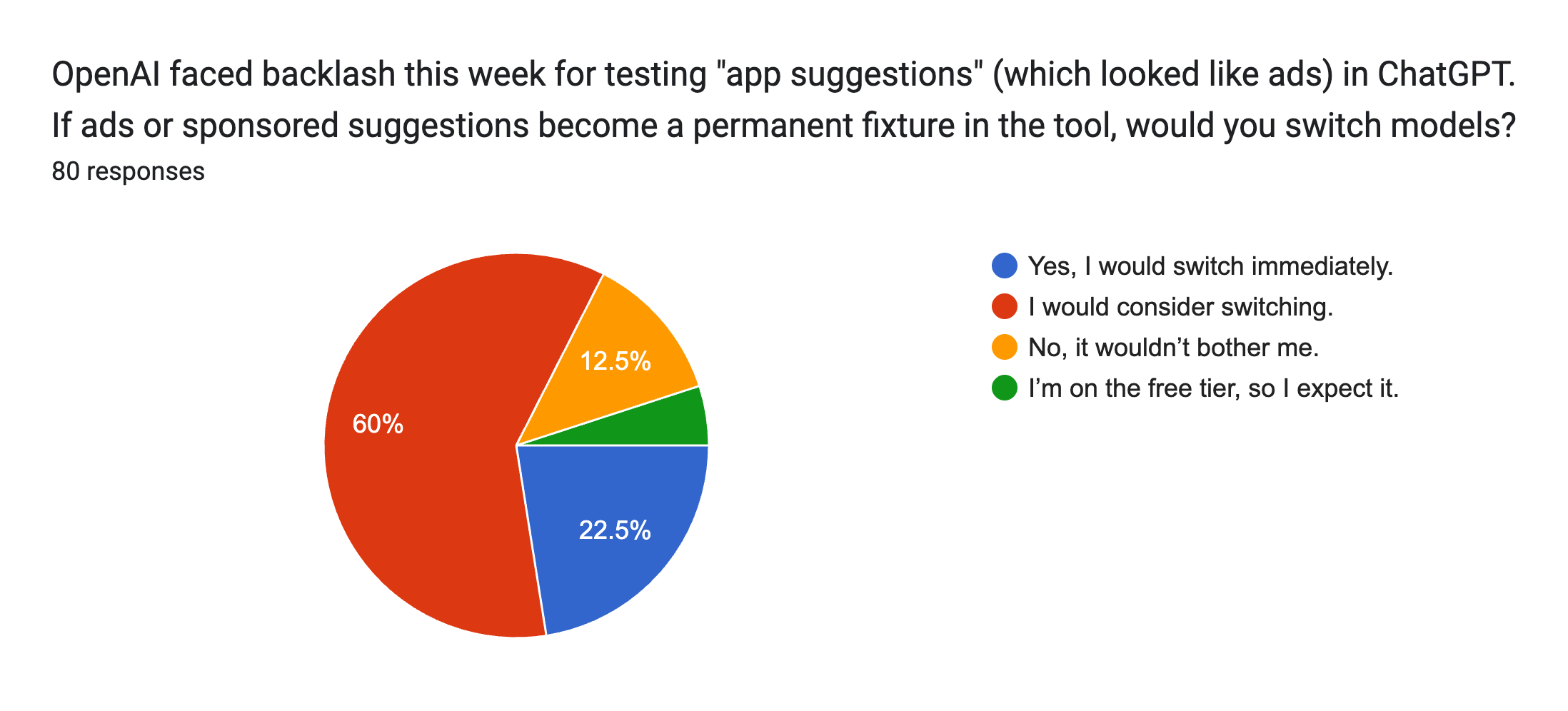
When asked if they would switch models if ads were introduced permanently, the audience sentiment was overwhelmingly negative.
As noted, a combined 82.5% of respondents expressed a willingness to leave. This breaks down into:
- 60% who said they "would consider switching."
- 22.5% who said, "Yes, I would switch immediately."
In contrast, only 12.5% said it "wouldn’t bother" them, and just 5% accepted it as an expectation of being on the free tier.
AI’s Nuanced Impact on Workforce Planning
This week, we also asked about how AI is impacting workforce planning at companies. While headlines continue to warn of AI-driven job cuts, the on-the-ground reality for our audience is more complex than a simple "replacement" narrative.
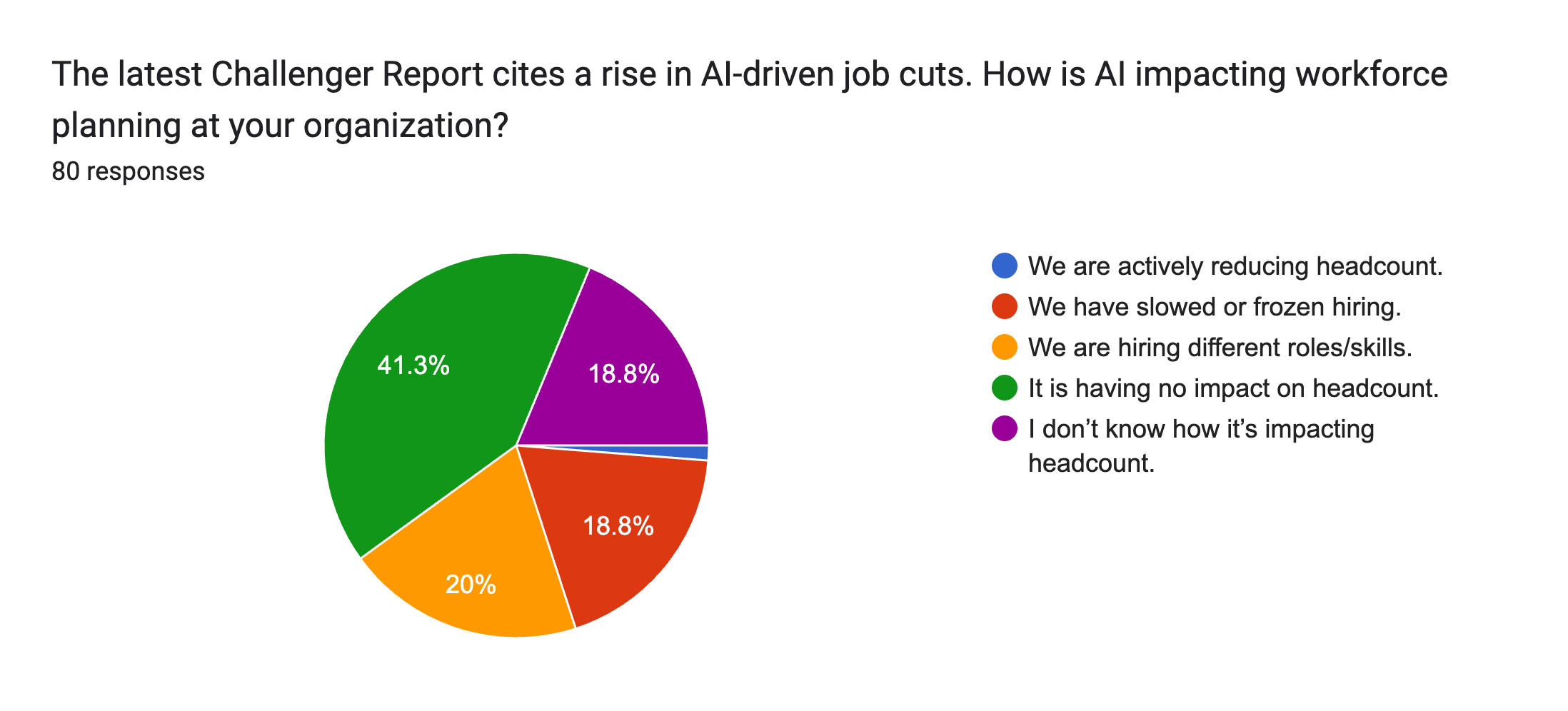
When asked how AI is impacting workforce planning at their organization:
- 41.3% report it is having "no impact on headcount."
- 18.8% say they have "slowed or frozen hiring."
- 20% note they are "hiring different roles/skills."
- 18.8% admit they "don’t know how it’s impacting headcount."
- Only 1.3% report they are "actively reducing headcount."
While active reduction is rare (1.3%) in this dataset, a significant portion of organizations (38.8% combined) are altering their hiring behavior by either freezing headcount or shifting their focus to different skills. This indicates a period of recalibration rather than immediate displacement.
A Community of Decision Makers
The respondents this week represent an influential segment of the market, with the majority holding sway over which AI tools get adopted.
Regarding their role in AI purchasing decisions:
- 45% identify as a "key influencer/recommender."
- 22.5% are the "final decision maker."
- 18.8% "research and use tools" but don't decide the budget.
- 13.7% have "no involvement."
This means that 68% of the audience plays a direct role in evaluating and purchasing AI software.
Methodology and Audience Description
In our ongoing AI Pulse surveys, we gather insights from listeners of our podcast to get a sense of how our audience feels about various topics in artificial intelligence. Each survey is conducted over a one-week period, coinciding with the first seven days after an episode is released. During that time, our episodes typically receive around 11,000 downloads.
Our survey results reflect a self-selected sample of listeners who choose to participate, and typically we receive a few hundred responses. While this is not a formal or randomized survey, it offers a meaningful snapshot of how our engaged audience perceives AI-related issues.
In summary, when you see percentages in our headlines, they represent the views of those listeners who chose to share their opinions with us. This approach helps us understand the pulse of our community, even if it doesn’t represent a statistically randomized sample of the broader population.